Who Is the Red Lobster CEO? Meet Damola Adamolekun and His Comeback Plan
If you’ve eaten at Red Lobster lately, you’ve probably noticed something different. New lighting. A shorter menu. Better service. That change didn’t happen by accident.

The man behind it is the Red Lobster CEO, Damola Adamolekun. He took over a bankrupt seafood chain in 2024 and turned it into one of the most talked-about turnaround stories in the restaurant world. In this guide, you’ll learn who he is, how he got the job, what he’s doing with the company, and where Red Lobster is headed next.
Quick Facts About the Red Lobster CEO
Before we go deeper, here’s a fast snapshot of Damola Adamolekun.
- Full name: Damola Adamolekun
- Title: Chief Executive Officer, Red Lobster
- Age: 37 (born February 1989)
- Appointed: August 2024
- Born in: Nigeria
- Citizenship: Nigerian-American (U.S. citizen since 1998)
- Education: Brown University (B.A., Economics and Political Science); Harvard Business School (MBA)
- Previous role: CEO of P.F. Chang’s (2020–2023)
- Company HQ: Orlando, Florida
- Parent company: Fortress Investment Group
Who Is Damola Adamolekun?
Damola Adamolekun was born in Nigeria to a neurologist father and a pharmacist mother. His family moved often during his childhood, living in Zimbabwe and the Netherlands before settling in Springfield, Illinois when he was nine. He later grew up in Columbia, Maryland, where he attended Wilde Lake High School.
Even as a teenager, Adamolekun showed an interest in business. He opened his first stock portfolio at age 16. That early curiosity about markets pointed toward the career path he’d eventually take.
He studied Economics and Political Science at Brown University, where he played on the school’s Ivy League championship football team and led the Brown Investment Group. After Brown, he earned an MBA from Harvard Business School.
From Investment Banking to Restaurant Leadership
Before becoming a restaurant executive, Adamolekun spent years in finance. He started as an intern at Goldman Sachs at age 19, then worked full-time in the firm’s investment banking division. From there, he moved into private equity as an associate at TPG Inc.
In 2017, he joined Paulson & Co., the investment firm founded by billionaire investor John Paulson. This is where his connection to the restaurant industry began. While at Paulson & Co., P.F. Chang’s came up for sale. Adamolekun pitched the idea internally, and the firm went on to acquire a controlling stake in the Asian-fusion chain in 2019.
That deal changed the direction of his career. He joined P.F. Chang’s board and became Chief Strategy Officer before being named CEO in 2020, becoming the brand’s first Black chief executive at just 31 years old.
How Damola Adamolekun Became Red Lobster CEO
Red Lobster’s troubles didn’t start recently. They trace back to 2014, when Golden Gate Capital bought the chain from Darden Restaurants for $2.1 billion. To help pay for the deal, Golden Gate sold off the real estate under roughly 500 locations, leaving Red Lobster to pay rent on buildings it used to own. That decision drained cash for years afterward.
Read Also: Red Lobster Full Menu With Prices And Pictures
Things got worse in 2023 when Red Lobster launched an all-you-can-eat “Ultimate Endless Shrimp” deal for $20. Customers loved it, but the company badly underestimated how many people would take advantage of the offer. The promotion reportedly cost the chain around $11 million in losses.
By May 20, 2024, Red Lobster filed for Chapter 11 bankruptcy protection, carrying more than $1 billion in debt and closing 93 locations.
Weeks later, Fortress Investment Group the firm co-founded by Milwaukee Bucks co-owner Wesley Edens stepped in to acquire the chain. On August 26, 2024, Fortress named Adamolekun CEO of RL Investor Holdings LLC, making him, at 35, the youngest CEO in Red Lobster’s history. He took over from Jonathan Tibus, who had been leading Red Lobster through the bankruptcy process as a restructuring-focused CEO. Red Lobster exited bankruptcy in a matter of months, a remarkably fast turnaround for a company that size.
Founded in 1968, Red Lobster has been a staple of American casual dining for more than five decades. That long history is part of why Adamolekun says he took the job the brand still means something to millions of guests, even after a rough few years.
Adamolekun has said he took the job because Red Lobster was “the first really successful casual dining chain in America at scale,” and that his plan was to fix the business through steady, practical changes rather than a total overhaul.
What Is Damola Adamolekun’s Turnaround Plan?
Adamolekun didn’t walk into Red Lobster with a flashy rebrand. His plan has focused on fixing the basics first.
1. Killing the Endless Shrimp Promotion for Good
Adamolekun has said clearly that the endless shrimp deal is never coming back. In his words, that’s “because I know how to do math.” The math didn’t work, and he’s not interested in repeating it.
2. Renovating Restaurants
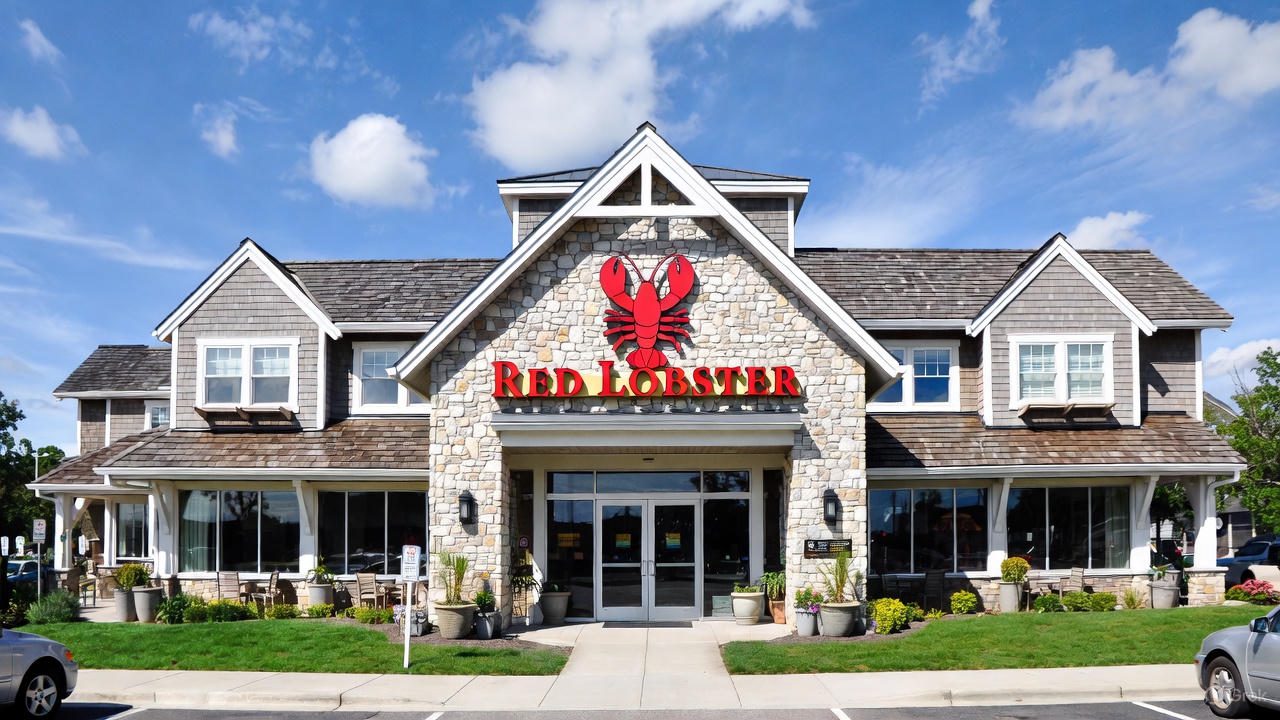
Red Lobster set aside a $60 million plan to refresh its roughly 544 remaining locations. That includes new lighting, updated music, fresh decor, and fixes to broken HVAC systems, torn carpets, and worn-out furniture. The goal is simple: make the dining room feel less tired and more inviting.
3. Trimming the Menu
Instead of adding more items, Red Lobster has been removing dishes that don’t sell well. A leaner menu means the kitchen can focus on doing fewer things really well especially the lobster and crab dishes that made the brand famous in the first place.
4. Lowering Prices Where It Makes Sense
Adamolekun has talked about wanting to “lower the check” for guests. His argument is that Red Lobster has a strong product, so it should also be a strong value, not just an occasional splurge.
5. Bringing Back Fan Favorites
The company has run seasonal promotions like Lobsterfest, featuring $20 lobster rolls and unlimited Cheddar Bay Biscuits, along with a new happy hour menu. These are lower-risk ways to bring back excitement without repeating the endless shrimp mistake.
The results have started to show. Red Lobster is projecting a positive net income of $2.1 million in fiscal 2026, and adjusted EBITDA is expected to grow 43% between fiscal 2025 and fiscal 2027. In an interview with Fortune’s Ruth Umoh for her CEO Playbook series, Adamolekun called it “the greatest comeback in the history of the restaurant industry.”
Red Lobster’s Leadership Team and Ownership
Adamolekun isn’t running Red Lobster’s turnaround alone. Since taking over, he’s built out a leadership team with real restaurant experience:
- Larry Konecny – Chief Operating Officer, focused on day-to-day restaurant operations
- Bob Baker – Chief Financial Officer, overseeing the company’s finances during recovery
Red Lobster is owned by Fortress Investment Group, the private investment firm that bought the chain out of bankruptcy in 2024. Fortress installed Adamolekun as CEO and has backed the $60 million restaurant revitalization plan.
Red Lobster’s AI Strategy Under Adamolekun
One of the newer parts of Adamolekun’s plan is technology. He’s said publicly that he wants Red Lobster to become “the most AI-forward restaurant company that exists.”
The plan includes using artificial intelligence for:
- Sales forecasting — predicting how much food to order and how many staff to schedule each week, work that headquarters currently handles by hand
- Performance reporting — automatically compiling restaurant metrics before managers visit a location
- Training and HR materials — generating presentations and evaluation documents
- Customer-facing tools — some locations already use AI-powered phone systems to handle takeout calls and menu questions
Adamolekun has said he personally uses Anthropic’s Claude for tasks like coding help and building presentations, and that his team chose it after comparing several AI tools. He’s encouraging every department to come up with its own ways to use AI rather than mandating one company-wide system.
This move fits a bigger trend. According to the National Restaurant Association, more than a quarter of restaurant operators were using some form of AI by early 2026, up from about 16% just two years earlier.
Damola Adamolekun’s Leadership Philosophy
Adamolekun often talks about leadership in personal terms, not just business strategy. On the “How Leaders Lead with David Novak” podcast, he said, “Leadership is self-improvement… the stronger you are as a person, the more people are going to want to follow you.”
He’s also been open about not having every qualification typically expected of a CEO. When he took over P.F. Chang’s at 31, he was replacing a far more experienced executive. His response: “You can’t be a perfect candidate for anything… so, for me, it’s about recognizing that and accentuating your strengths.”
That mindset lean on your strengths, listen to people with more experience, and don’t wait to feel “ready” has followed him from Goldman Sachs to P.F. Chang’s to Red Lobster.
FAQ’s
Who is the current CEO of Red Lobster?
Damola Adamolekun is the current Red Lobster CEO. He was appointed in August 2024 by Fortress Investment Group after the company’s bankruptcy.
How old is the Red Lobster CEO?
Damola Adamolekun was born in February 1989, making him 37 years old. He became Red Lobster’s youngest CEO ever when he took the job at 35.
Who owns Red Lobster now?
Red Lobster is owned by Fortress Investment Group, a private investment firm that acquired the chain out of Chapter 11 bankruptcy in 2024.
What did the Red Lobster CEO do before joining the company?
Before Red Lobster, Adamolekun was CEO of P.F. Chang’s from 2020 to 2023. Before that, he worked in investment banking at Goldman Sachs, private equity at TPG, and as a partner at Paulson & Co.
Is Red Lobster bringing back endless shrimp?
No. Adamolekun has said publicly that the endless shrimp promotion will not return, since it contributed heavily to the company’s financial losses before bankruptcy.
Final Thoughts
The story of the Red Lobster CEO is really a story about fixing fundamentals. Damola Adamolekun didn’t reinvent Red Lobster overnight. He renovated restaurants, cut a menu that had grown too big, killed a promotion that was losing money, and started building out a leadership team and technology strategy to match.
It’s still early in the turnaround, but the numbers are moving in the right direction, and Red Lobster’s next chapter looks a lot steadier than its last one.